After four years of delivery, the Energy Company Obligation 4 (ECO4) is scheduled to end on 31 March 2026.

As we settle into 2026, one of the biggest questions across the energy, retrofit, and sustainability space isn’t what’s next, but what will replace one of the UK’s longest-running home energy support schemes: ECO4.
After four years of delivery, the Energy Company Obligation 4 (ECO4) is scheduled to end on 31 March 2026, however, has since been extended following a consultation to 31 December 2026.
The Energy Company Obligation (ECO) family of schemes has been running since 2013, requiring larger energy suppliers to fund energy efficiency upgrades in eligible homes (See the common criteria here) ECO4, launched in 2022, focused heavily on helping low-income and fuel-poor households improve energy performance through measures such as insulation, boiler or heating upgrades, and low-carbon technologies.
Find out more on how Cyd Innovation help with ECO4 applications here.
With ECO4 due to conclude in March (UPDATED), the immediate concern for many stakeholders isn’t just the deadline. Its the gap that could form between the scheme, and what comes to replace it. This concern isn’t hypothetical. Reporting suggests that ending ECO4 without a clear, running successor risks leaving low‑income households without support. Under the current ECO4 scheme, around 875,900 energy efficiency measures have already been installed across roughly 260,400 households, making it by far the largest recent government retrofit programme, reflecting the possible loss upon the ECO4 end date.
For installers and supply chains, the flow of retrofit work is likely to stall. The gap between the end of ECO4 and its replacement is likely to lead to a drop in retrofit jobs. Affecting installers, local trades personnel and manufacturers of ECO4 installations. A shift to a new or different scheme could also mean the sector may need upskilling and certifications to handle additional installations.
UPDATE: Since the announcement of the ECO4 Extension, short term stability has now become more prominent. The ECO4 extension helps maintain continuity of funded projects, supporting installer pipelines and preventing an immediate slowdown in delivery. For supply chains, this extension reduces the risk of redundancies, factory slowdowns, and loss of skilled labour that often occurs when schemes end abruptly. while the ECO4 extension offers breathing space, longer-term uncertainty remains. Any transition to a successor scheme, whether an evolved ECO model or a new retrofit funding programme - could still require changes in compliance processes, eligibility criteria, technical standards, or reporting requirements.
1. A Short Extension or Transition Period
The government has consulted on extending ECO4 by 6–9 months to maintain support while successor arrangements are finalised. Suppliers may also be allowed to “carry over” delivery obligations to a future programme, helping maintain continuity and avoid abrupt cut-offs in March.
2. The Warm Homes Plan Takes Centre Stage
The Warm Homes Plan is the most significant policy initiative on the horizon. It aims to fund a broad range of energy efficiency and low-carbon heating measures across the UK. While not a direct replacement for ECO4, it represents a larger funding package intended to deliver deeper decarbonisation outcomes and broader support, likely via social housing funds and local grants. However, details on the post ECO4 date remain incomplete.
3. A Broader “Home Upgrade Obligation”
Alongside extensions and the Warm Homes Plan, there’s ongoing consultation about a new type of home upgrade obligation that could sit between ECO-style supplier obligations and taxpayer‑funded grants. This idea isn’t finalised, but would aim to combine the strengths of both approaches.
With the landscape in flux, the guidance we’re hearing from organisations tracking these changes is consistent.
1. Act sooner rather than later if you qualify for ECO4
Submitting applications and securing work before the scheme ends provides the best chance of accessing support under the current rules.
2. Keep informed about Warm Homes Plan announcements
Because this programme will likely be the biggest successor to ECO4, understanding how the grants will be allocated and when should be a priority for homeowners and installers alike. Consider diversifying services (e.g., decarbonisation packages, hybrid heating systems) and ensure relevant personnel within the business are appropriately trained for any possible changes which may occur.
3. Expect the policy focus to broaden
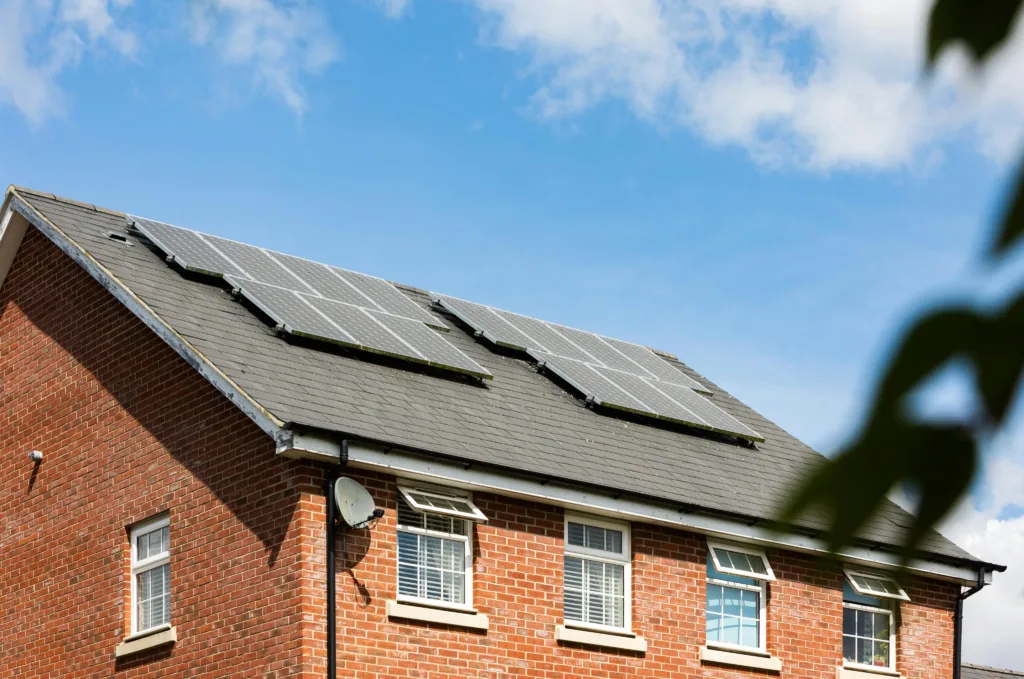
Future funding mechanisms are likely to emphasise whole‑house decarbonisation, heat pump uptake, solar and battery combinations, and tighter energy performance standards, signalling a shift from basic fuel poverty support toward deeper net‑zero outcomes.
Speak To Our Energy Grant Specialists
The UK Government has now formally confirmed a nine-month extension to the Energy Company Obligation (ECO4) scheme, moving its end date from 31 March 2026 to 31 December 2026.
The decision follows a government consultation and provides clarity after months of uncertainty about whether ECO4 would end abruptly or be given additional time. While the extension is welcome, it’s important to understand what has actually been extended. This article explains what the ECO4 extension means in practice for homeowners, landlords, tenants, installers and the wider retrofit sector.
The extension applies to the ECO4 scheme end date, not the size or scope of the scheme.
In simple terms:
The government has been clear that this is not a new phase of ECO4 and not an expansion of funding. Instead, the extra time is intended to:
This avoids a “cliff-edge” in March 2026 that could have disrupted households, installers and supply chains
For eligible households, the extension provides more time, although not unlimited.
Key takeaways:
However, demand remains high and supplier targets have not been reduced. Waiting until late 2026 could still mean missing out.
For landlords, particularly in the private rented sector, the extension offers greater planning certainty.
ECO4 can still be used to:
The additional nine months reduces pressure to rush works before March 2026 and allows landlords to:
That said, the extension does not mean ECO4 will continue indefinitely, and there will be no automatic successor supplier obligation once ECO4 ends.
For installers, retrofit coordinators and delivery partners, the extension is primarily about completion and quality, not growth.
The government’s intent is to:
Crucially:
Installers should expect continued scrutiny around compliance, evidence and consumer protection as delivery continues through 2026.
As of right now, there is still no official replacement for ECO4, leaving many scratching their heads. While the newly introduced Warm Homes Plan shares some of ECO4’s core aims, it is not a direct replacement for the scheme. Instead, it represents a broader shift in government policy.
ECO4 focused heavily on insulation-led upgrades delivered through energy suppliers, whereas the Warm Homes Plan is designed as a longer-term programme with greater emphasis on renewable and low-carbon technologies such as heat pumps, solar panels and battery storage. Insulation is still expected to play an important role, but it is no longer positioned as the central driver in the same way ECO4 was.
Ultimately, for households looking for an “alternative” to ECO4, the Warm Homes Plan is the closest successor in terms of ambition and direction. It signals a new approach aimed at reducing energy bills by cutting dependence on gas, accelerating the rollout of renewable power, and supporting upgrades that create warmer, cheaper-to-run homes across the UK.
After four years of delivery, the Energy Company Obligation 4 (ECO4) is scheduled to end on 31 March 2026.
ECO4 is a British government energy-efficiency scheme (Energy Company Obligation) which aims to help an array of vulnerable households through FREE grants which provide improvements to home energy efficiency, reducing overall heating costs.
You can apply by clicking the button below. Cyd Innovation assess your application, determine your eligibility and help you apply directly.
No cost at all! the only cost is filling out the 60 second form. Cyd Innovation will assess your eligibility and guide you to a successful grant application, all for free through the energy company obligation scheme.
From application to installing your home energy improvements could be as quick as a few weeks.
Not at all. Whether you're a landlord, home owner or tenant, ECO4 funding applies to all, given you meet one of the many eligibility criteria above. If you are a tenant, you will require the landlord's permission for relevant installations.

Book a meeting with us to get your FREE Housing 2025 guest pass. Or simply pop by our stand, we will be handing out Welsh Cakes!
Award-winning Social Enterprise delivering seamless, high standard compliance, and managed services taking the strain from social landlords and installers.