Eligible Households could receive HUGEsolar power and energy grantsto reduce energy bills
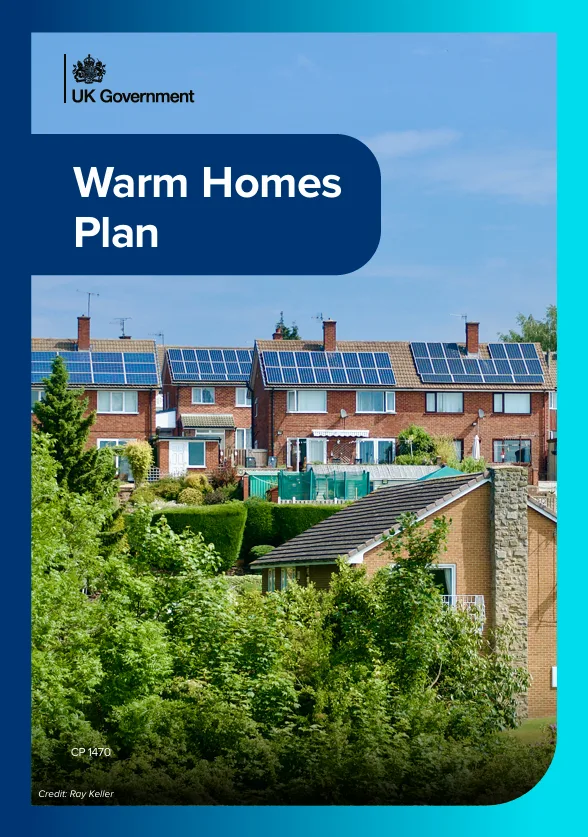
The Warm Homes Plan marks a significant turning point in how energy efficiency. Clean technology and household affordability are addressed across the UK. Originally introduced in 2024 as part of the government’s broader strategy to tackle rising energy bills and reduce emissions from homes, the plan’s full details were only finalised and published on 20 January 2026. Committing £15 billion over five years to help households cut energy bills while accelerating the national shift to low-carbon heating and renewable power.
At a time when energy costs remain a central concern for millions of people, the Warm Homes Plan aims to tackle this. By modernising the UK’s ageing housing stock, it reduces dependence on fossil fuels through practical, household-level solutions.
Rather than focusing on short-term relief, the Warm Homes Plan is designed as a structural change, to how homes will be powered and heated. By prioritising low-carbon technologies such as solar panels, heat pumps and home battery storage, the government is encouraging households to generate and use more of their own clean energy. This approach reflects a broader strategy to improve energy security while lowering emissions from domestic heating, which accounts for around 20% of the UK's total output.
£15bn Investment to Cut Energy Bills and Fuel Poverty
A core pillar of the Warm Homes Plan is its scale of funding. The £15bn package is intended to support households across all income levels, with a particular focus on lifting one million people out of fuel poverty. Funding will be delivered through a combination of grants and low- or zero-interest loans. This will allow more households to access green technologies that may have previously been unaffordable.
The Benefits Of Energy Efficiency Upgrades Under The Warm Homes Plan
Qualifying households can receive full funding for solar panels and batteries, through a £6bn funding pot. Other households can use grants and low-interest loans to reduce upfront costs and spread remaining installation expenses.
The Warm Homes Plan could help people save hundreds of pounds on their energy bills each year, with combined technologies like heat pumps, solar panels and batteries we estimate energy bills to reduce by £600 anually.
A significant reduction in the costs of home energy installations.
New Focus on Solar Panels, Heat Pumps and Battery Storage
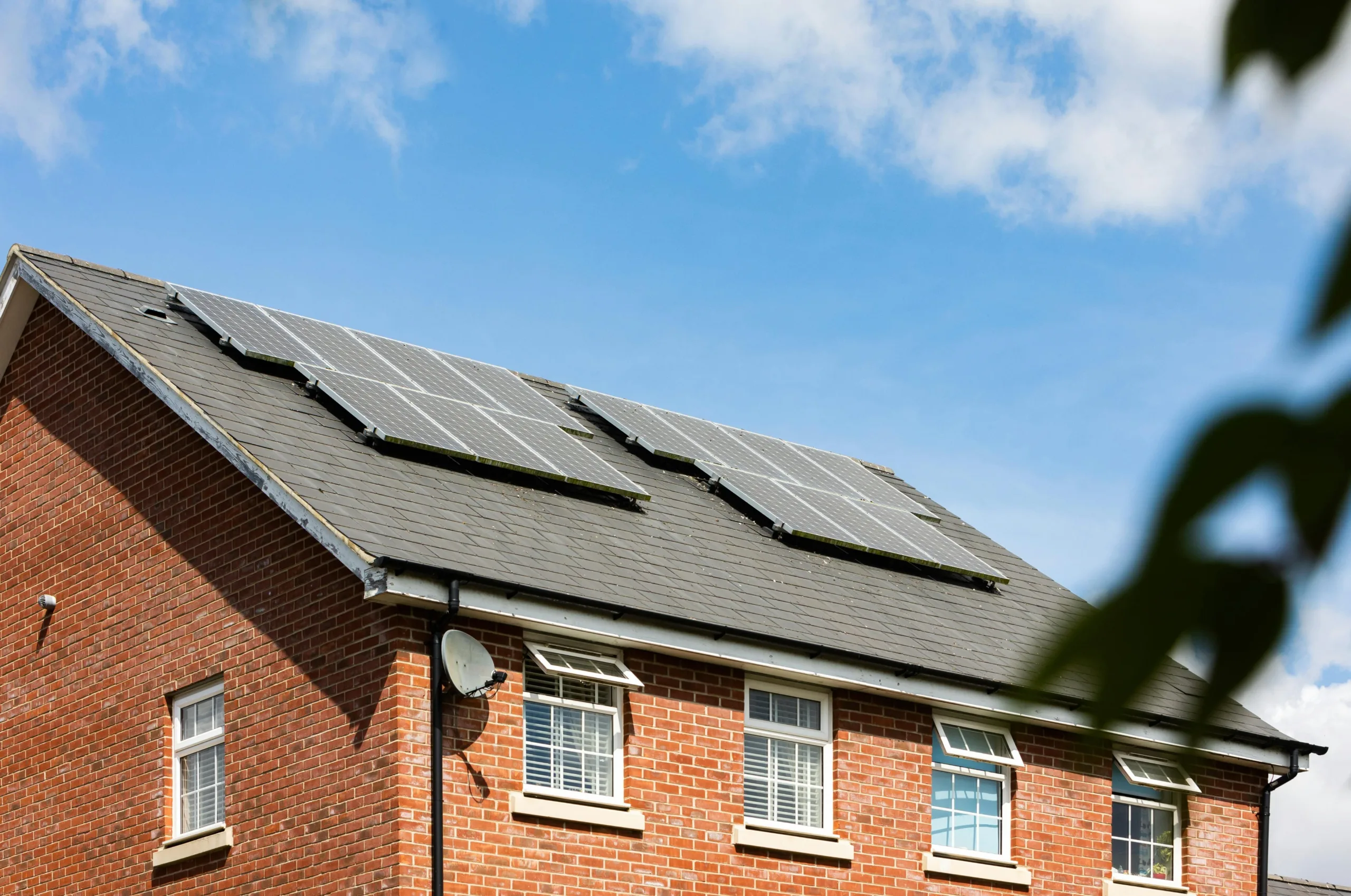
The Warm Homes Plan places strong emphasis on the trio of low-carbon technologies. Central to the strategy is the ambition to trigger a “rooftop revolution” by tripling the number of UK homes with solar panels.
By pairing solar panels with heat pumps, households can power low-carbon heating using home-generated electricity, reducing reliance on the national grid. Further benefits when considering the use of batteries would be storing and using more solar generated energy. and benefit from specialist tariffs that can reduce electricity costs to as little as 15p per kWh.
Heat pumps, which are significantly more energy-efficient than traditional gas boilers, form a major component of the plan. (However the government will have officiated a ban on installing new gas boilers) The extension of the Boiler Upgrade Scheme to 2029/30 further supports the scale up of installation numbers by offering grants of up to £7,500 to home owners to install. air source heat pumps.
Renters’ Rights and Minimum Energy Efficiency Standards (MEES)
The Warm Homes Plan also introduces important changes for landlords and renters, addressing long-standing concerns about energy inefficiency in the private rental sector.
From 2030, landlords will be required to ensure rental properties meet a minimumEnergy Performance Certificate (EPC) rating of C, an improvement on existing minimum energy efficiency standards (MEES) which was an E.
To support this shift, the government plans to reform EPC calculations. The government plans for EPC calculations to be on EPC efficiency rather than estimated running costs. This aims to prevent low-carbon installations from lowering ratings while improving living conditions for tenants.
EPC Reform and Private Rental Standards: How They Link To The Warm Homes Grant
As part of the Warm Homes Plan, EPC reform is intended to update how energy performance is assessed so that low-carbon technologies such as heat pumps and solar panels are better reflected in a property’s rating. This is expected to be introduced a little later into the parliamentary term.
The reform to EPCS underpins the Warm Homes Grant by ensuring that the value of low-carbon technologies is properly recognized and presents a clearer return on investment. This alignment is also important for properties benefitting grant funding, as it reduces the risk of upgrades negatively affecting EPC ratings. This will hopefully increase confidence adopting low-carbon technologies.
EPC Reform: Impact on Investment Planning
The alignment of EPC reform, rising rental standards and the Warm Homes Grant encourages landlords to plan upgrades strategically rather than reactively. Instead of carrying out incremental improvements to meet short-term compliance targets, landlords can invest in coordinated retrofit measures that are both grant-supported and aligned with future EPC methodology. This reduces the risk of undertaking works that later need to be revisited as standards evolve, supporting more cost-effective, long-term asset planning.
In parallel, the policy to raise minimum energy efficiency standard (MEES) in the private rented sector "targeting EPC C by 2030" creates a clear compliance requirement in encouragement of improving investment of energy efficiency in homes. for landlords. While this requirement is regulatory rather than financial, the Warm Homes Plan provides a key route to funding the upgrades needed to meet these higher standards, particularly for landlords with older or inefficient stock. Measures supported through the grant, such as low-carbon heating systems and renewable generation are expected to play a central role in achieving compliance.
EPC Reform: Compliance Inaction For Landlords
Delaying energy performance upgrades carries increasing risk. As minimum standards tighten, landlords with inefficient properties may facerestrictions on letting, higher remediation costs due to rushed works, or reduced access to grant funding as schemes become oversubscribed or more targeted. There is also a growing risk of ending up with unlettable properties and a significant risk of asset devaluation, as poorly performing properties attract lower rents, become less attractive to tenants, lenders and insurers in a more regulated market.
Taken together, these policies reinforce each other: the Warm Homes Plan delivers the financial support, while EPC reform and the minimum energy performance certificate standards shape the rules and performance benchmarks that guide how and why upgrades are carried out.
For homeowners and landlords, this creates a clearer, more joined-up framework that delivers a reduction in fuel poverty whilst demonstratable improving housing standards.
What It Means For Businesses In The Industry
For businesses operating in retrofit delivery, clean energy supply, construction and housing services, the long awaited Warm Homes Plan represents one of the most significant policy shifts in recent years. The clarity provided within holds the potential to unlock substantial opportunities across business' value chains. A sustained demand pipeline for the technologies outlined, heat pumps, solar panels etc, as well as associated services such as retrofit design & installation, monitoring and aftercare. Specifically, for manufacturers, suppliers and installers, this supports a more predictable forward order book, justifying increased training capacity and product lines where needed. However, it also signals the need to prepare. Businesses may need to assess workforce skills, training pipelines and product availability to ensure they can scale delivery without compromising quality. Those able to expand accredited installer networks, invest in training, or diversify product lines early are likely to be better positioned as demand accelerates.
Driving Job Growth Through The Warm Homes Plan
Critically, the alignment of funding with regulatory change, including EPC reform and tighter minimum energy performance standards for private rentals; creates a stronger commercial rationale for investment within home energy efficiency projects. for deeper, whole-house retrofit projects rather than piecemeal interventions. This shift encourages more comprehensive business models that integrate energy assessments, specification, financing options and project delivery. Organisations that can demonstrate technical competence across multiple measures, and an understanding of long-term compliance requirements, are likely to perform better.
The warm homes plan emphasizes the importance of consumer protection regulation and increasing standard across the industry. It underscores the importance of quality assurance, measurement and reporting, particularly as EPC methodologies evolve. Businesses that invest in up-to-date training, accreditation and data-led reporting will play a key role in supporting delivery at scale and improving confidence across the sector.
Local Authority & Delivery Partners
Local authorities and delivery partners are set to play a central role in administering elements of the plan, particularly through place-based grants. Businesses that engage can gain a competitive advantage, improve uptake rates and build long-term partnerships that extend beyond individual installations.
THE ECO4 Replacement?
Does the Warm Homes Plan replace ECO4? While the Warm Homes Plan overlaps with some of ECO4’s objectives, it does not directly replace the ECO4 scheme. Instead, it marks a shift in focus. ECO4 was primarily centred on insulation-led measures, whereas the Warm Homes Plan places greater emphasis on renewable technologies such as heat pumps, solar panels and batteries. Insulation remains important, but it is no longer the central pillar of the government’s approach under this new framework.
Although delivery timelines and implementation details will continue to evolve, the ambition of the Warm Homes Plan signals a decisive move toward cleaner, more affordable domestic energy. For homeowners, renters and the wider economy, it sets out a framework that links cost-of-living relief with climate action, firmly positioning energy-efficient homes at the centre of the UK’s future.
Ultimately, the Warm Homes Plan represents a long-term strategy to reduce household energy costs by cutting reliance on imported gas and increasing the use of homegrown, renewable power. By encouraging wider adoption of solar energy, low-carbon heating and energy storage, the plan aims to deliver warmer homes, lower bills and a more resilient national energy system.
At a glance, the Warm Homes Plan focuses on Lowering bills, cutting fuel poverty, delivering jobs and growth across the industry.
Warm Homes Plan FAQs
Under the Warm Homes Plan 2026, eligibility is broad but tiered.
Low-income households and those in fuel poverty are prioritised for fully funded upgrades, including solar panels, heat pumps and battery storage, delivered through local authorities and social housing programmes.
Homeowners and private renters in properties with poor energy efficiency ratings may also qualify for grants where income thresholds or benefit criteria are met. In addition, the plan introduces government-backed low- and zero-interest loans available to households regardless of income, enabling wider access to clean heating and renewable technologies.
Eligibility and support levels vary by scheme and region, but the most generous assistance is targeted at vulnerable households.
Book a meeting with us to get your FREE Housing 2025 guest pass. Or simply pop by our stand, we will be handing out Welsh Cakes!
Award-winning Social Enterprise delivering seamless, high standard compliance, and managed services taking the strain from social landlords and installers.
We use cookies to enhance your browsing experience, serve personalised ads or content, and analyse our traffic. By clicking "Accept", you consent to our use of cookies.
Functional
Always active
The technical storage or access is strictly necessary for the legitimate purpose of enabling the use of a specific service explicitly requested by the subscriber or user, or for the sole purpose of carrying out the transmission of a communication over an electronic communications network.
Preferences
The technical storage or access is necessary for the legitimate purpose of storing preferences that are not requested by the subscriber or user.
Statistics
The technical storage or access that is used exclusively for statistical purposes.The technical storage or access that is used exclusively for anonymous statistical purposes. Without a subpoena, voluntary compliance on the part of your Internet Service Provider, or additional records from a third party, information stored or retrieved for this purpose alone cannot usually be used to identify you.
Marketing
The technical storage or access is required to create user profiles to send advertising, or to track the user on a website or across several websites for similar marketing purposes.